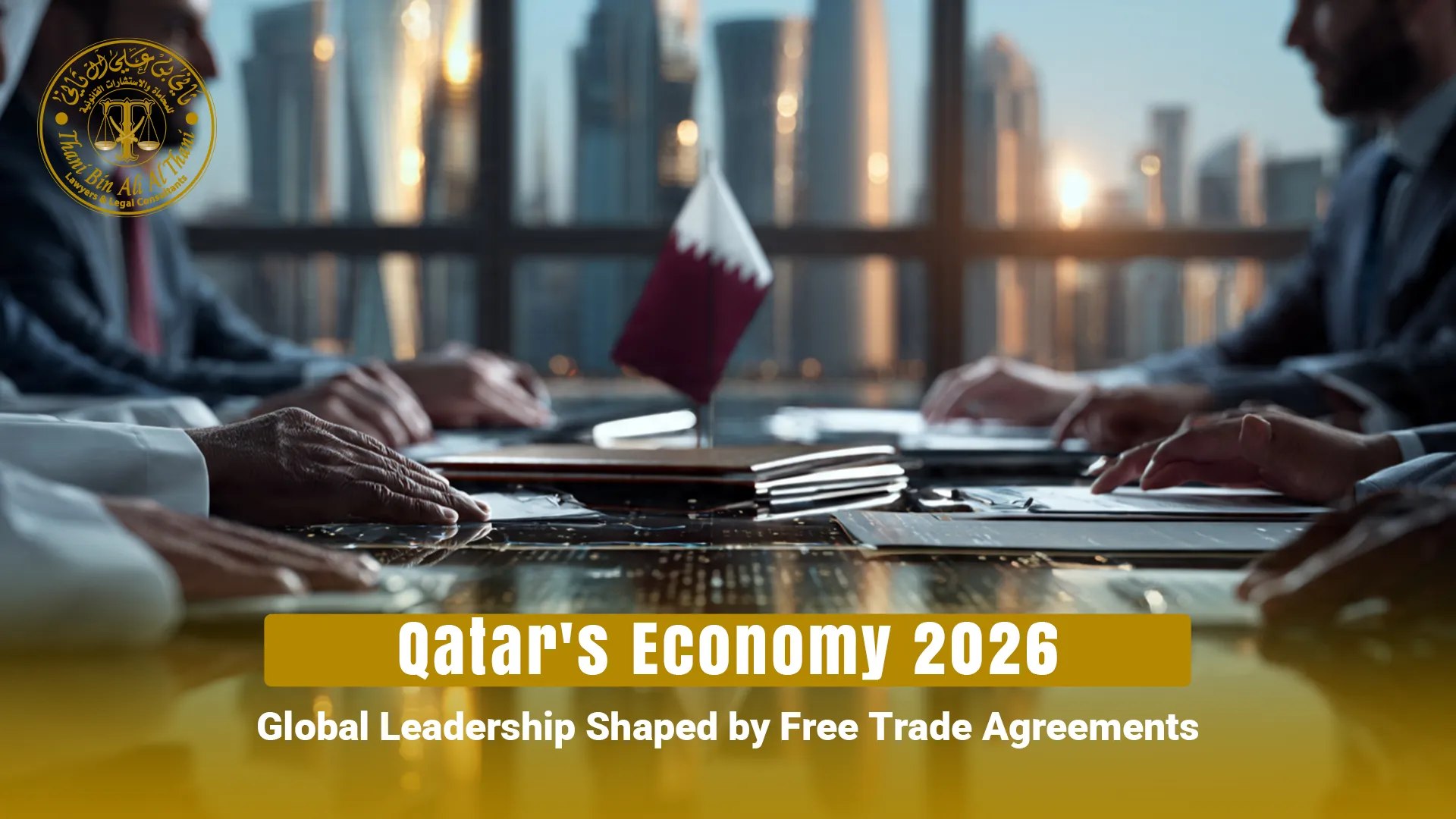

Qatar today occupies a preeminent position among the region’s most stable and attractive investment destinations, propelled by a far-sighted economic vision that transcends conventional reliance on natural resources to embrace the horizons of open and intelligent global trade. This distinguished standing would not have been attainable without the crafting of a sophisticated legal and commercial safety net, embodied in a series of free trade agreements that have redefined the State’s role on the map of the international economy.
Against this backdrop, the strategic transformation the State is witnessing at this historic juncture renders an understanding of the commercial agreements framework an imperative for every institution planning to expand. Doha is no longer merely a global energy supplier; it has evolved into a logistical and legislative centre of gravity connecting the world’s continents through a complex network of robust economic partnerships that guarantee the flow of capital and the protection of investments.
The rise of Qatar’s economy in 2026 as a pivotal player on the international stage has not come about by chance, but is rather the product of meticulous planning aimed at building cross-border trade bridges that ensure the access of Qatari products and services to markets encompassing billions of consumers.
For global companies, Qatar today represents a secure launchpad, where financial incentives converge with equitable legislation and an advanced digital environment — creating an ideal climate for growth and innovation at the heart of the Middle East.
This measured openness reflects the Qatari leadership’s awareness of the requirements of the new knowledge economy, wherein competitiveness becomes linked to the State’s capacity to facilitate trade flows and attract creative talent and high-quality investment.
The Map of International Partnerships and Their Impact on Qatar’s Economy in 2026
The State has adopted a policy of commercial openness as a sustainable working methodology to strengthen Qatar’s economy in 2026, having concluded trade agreements with the world’s largest economies and trading blocs.
This strategic orientation grants investors and companies operating in Qatar an unrivalled competitive advantage — namely, the ability to access key markets with considerable flexibility and substantially reduced logistical costs.
Over the course of recent years, Qatar has concluded bilateral and multilateral agreements with major global economies, encompassing:
Asian Economic Powerhouses
Including China, India, and South Korea — strategic partnerships that ensure the flow of modern technology and the exchange of specialised industrial expertise.
Read also: Investment in Qatar’s Free Zones: Promising Opportunities and Legal Frameworks in 2026
The European Bloc
Through robust agreements with France, Germany, Switzerland, and Turkey, facilitating the access of Qatari products and services to high-purchasing-power European markets.
Regional and International Groupings
Such as the Gulf Cooperation Council agreement with Singapore and free trade agreements with EFTA member states — agreements that serve as leading models for the liberalisation of services trade and the regulation of fair competition rules.
The Pillars of Qatar’s Future Economic Strategy
Free trade agreements constitute the foundational pillar upon which the State relies to expand its access to global markets, and are the true engine of growth for Qatar’s economy in 2026.
At their core, these agreements operate through the reduction or elimination of customs duties, the liberalisation of services trade, and the protection of intellectual property rights — thereby providing a stable and predictable investment environment that both foreign and domestic investors seek.
All such developments are anchored within the framework of the World Trade Organization (WTO), assuring global companies that trade practices in Qatar conform to the highest international standards and afford robust legal protection against any unforeseen fluctuations — further cementing Doha’s standing as a trusted global financial and commercial centre in support of the stability of Qatar’s economy in 2026.

How Do Trade Agreements Serve the Growth of Companies and Investors?
Through this integrated framework, the State aims to facilitate trade across multiple channels — an objective that is directly and immediately reflected in corporate performance and adds momentum to Qatar’s economy in 2026:
Elimination of Customs and Bureaucratic Barriers
The agreements streamline the movement of goods and services across borders by reducing administrative procedures and eliminating duties on intermediate goods and raw materials — thereby lowering the operational costs of manufacturers and logistics companies and increasing their profit margins.
A Legally Protected Investment Environment
Attracting foreign direct investment requires the provision of a secure legal framework, which Qatar achieves with distinction through investment protection agreements that bolster the strength of Qatar’s economy in 2026. These agreements guarantee investors national treatment, protection of their assets against non-commercial risks, and full freedom to repatriate profits abroad.
Supporting Economic Diversification and Achieving Sustainability
Reducing dependence on the oil and gas sector is the driving imperative behind these policies. By facilitating the flow of investment into manufacturing, technology, tourism, and financial services, Qatar is opening new avenues for non-hydrocarbon exports — supporting the State’s vision of building a flexible and sustainable Qatar economy in 2026.
The Strategic Benefits of Free Trade Agreements and Their Impact on Qatar’s Economy in 2026
The advantages accruing to companies engaged with Qatar’s economy in 2026 — underpinned by these agreements — are manifold. The most prominent may be summarised as follows:
- Expanding Market Access: Facilitating the reach of Qatari exports — particularly non-hydrocarbon exports — to vast global markets at highly competitive prices.
- Attracting Quality Investment: Providing a legal framework that guarantees comprehensive protection, as reflected in investment protection agreements concluded with major states.
- Enhancing Competitiveness and Innovation: Openness to international competition incentivises Qatari and resident companies to improve quality and adopt advanced technological solutions befitting Qatar’s economy in 2026.
- Improving Regulatory Standards: Adopting international best practices in transparency, intellectual property protection, and the facilitation of digital customs procedures.
- Creating Specialised Employment Opportunities: The growth of trade and industrial sectors generates new employment requiring high-level skills, contributing to the development of a robust human capital base in support of Qatar’s economy in 2026.
Read also: Sustainability of Family Companies in Qatar under Law No. 8 of 2021
The Long-Term Legal and Economic Impact of the Agreements
These agreements assist Qatar in realising its economic ambitions through the transition towards a knowledge-based economy and securing its position as an indispensable global investment hub.
By opening new channels of trade, Qatari companies are integrated more deeply into global supply chains — ensuring their sustainability in the face of international economic fluctuations that may bear upon Qatar’s economy in 2026.
The firm commitment to international standards embedded in these agreements reflects the State’s earnestness in providing a transparent and equitable business environment, wherein investors’ rights are protected under binding international treaties — making Qatar’s economy in 2026 a leading model of prosperity and growth in the twenty-first century.
Frequently Asked Questions on Investment, Free Trade in Qatar, and Qatar’s Economy in 2026
What are the defining strengths of Qatar’s economy in 2026 compared to regional markets?
Qatar’s economy in 2026 is distinguished by a unique convergence of advanced infrastructure — such as Hamad Port — and flexible legislation permitting full foreign ownership in most sectors, making it the most secure destination for the long-term investor.
Do these agreements help reduce production costs?
Certainly. By eliminating customs duties on production inputs, machinery, and equipment imported from partner states, production costs are reduced and the global competitiveness of Qatari products is enhanced.
How does Qatar guarantee the protection of investors’ intellectual property rights?
Qatar adheres to WTO standards and incorporates stringent intellectual property protection provisions in its bilateral agreements — ensuring a secure environment for technology and creative companies contributing to Qatar’s economy in 2026.

Conclusion: The Future of Trade in Doha
Free trade agreements, within the legal framework, represent a natural extension of the State’s policy of economic openness, providing an organised legal framework for the promotion of trade, investment, and sustainable growth. By virtue of these agreements, Qatar’s economy in 2026 continues to consolidate its strength through attracting foreign direct investment, diversifying revenue streams, and enhancing the competitive efficiency of companies across all sectors.
The expansion of access to global markets and the improvement of the infrastructure and regulatory environment not only support the strategy of reducing dependence on traditional energy, but also ensure the building of a resilient and inclusive economy. Qatar today is not merely a limited domestic market — it is a global launchpad for ambitious companies seeking distinction and success in a stable, transparent, and promising investment environment under the aegis of Qatar’s economy in 2026.